
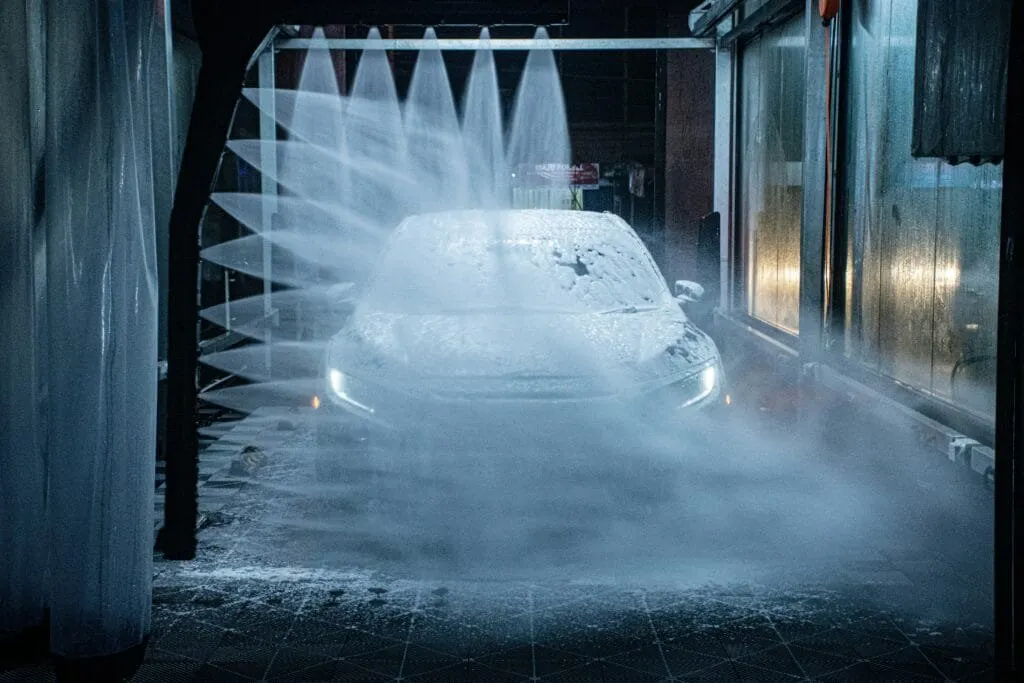
Automatic car washes are convenient, and for a quick rinse between real washes, they're not the end of the world. But the brush-style tunnel washes most people default to are doing more to your paint than they let on.
How Brush Washes Actually Work
Those long strip or brush curtains touch every single car that goes through the tunnel that day. They're rinsed between cars, but not deep-cleaned, which means grit, dirt, and debris from the car ahead of you gets carried onto your paint and dragged across the surface.
The Contamination Problem
That dragging motion, combined with whatever grit is still on the brushes, is a textbook recipe for fine, circular swirl marks, the kind that only show up clearly under direct sunlight, but add up fast with repeated visits.
Water Spots From a Weak Rinse
Most tunnel washes use regular tap water for the final rinse, not filtered or softened water. If the dry cycle doesn't fully remove it, you're left with the same hard-water spotting you'd get from air-drying in your driveway.
Touchless Washes Are Safer, Not Risk-Free
Touchless washes skip the brushes entirely, which removes the swirl-mark risk, but they lean on stronger chemical detergents to compensate for the lack of physical scrubbing. Over time, those chemicals can be harder on wax, sealant, or a ceramic coating than a proper hand wash.
What We Recommend Instead
A hand wash using the two-bucket method is still the safest option for your paint, whether you do it yourself or bring the car in for a detail. If a tunnel wash is genuinely your only option on a given week, touchless is the better of the two.