
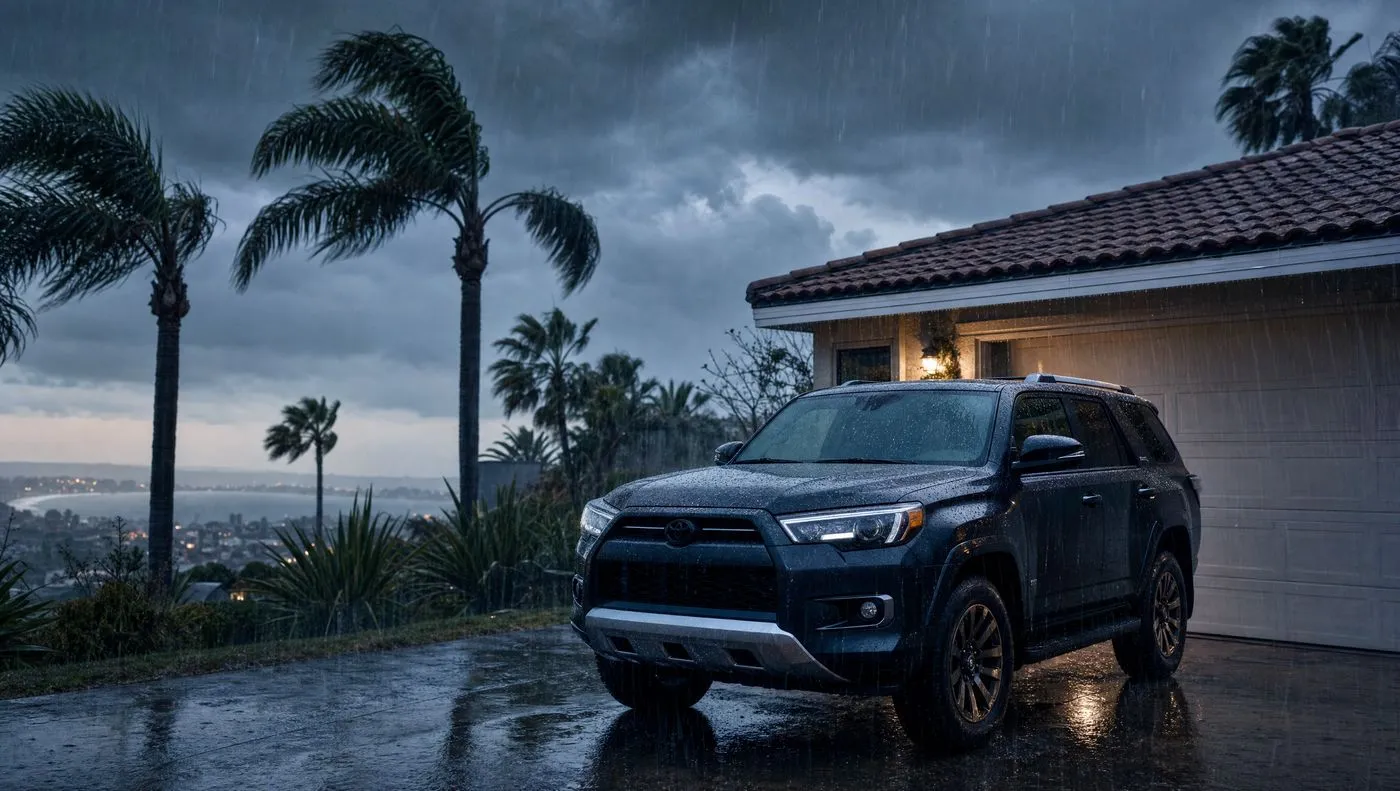
Every few years the forecast maps over the Pacific turn orange and red, and San Diego drivers start hearing the same two words: El Niño winter. This time it's not a borderline call. In its September 10, 2026 diagnostic discussion, NOAA's Climate Prediction Center put the odds of a very strong El Niño persisting through this fall and winter at greater than 90%, with a 75% chance the event ends up stronger than anything recorded in the Niño 3.4 region since 1950. That's the kind of language CPC doesn't use lightly, and it's why an El Niño winter in San Diego is worth actually planning around this year instead of shrugging off.
Here's the honest truth, though: strong odds on El Niño aren't the same thing as a guaranteed washout. Local meteorologist Todd Hall told KPBS in September that "the outcome is far from certain" and described El Niño as a "scene setter," not a forecast in itself, since a strong Pacific signal still has to fight through the polar vortex, the Madden-Julian Oscillation, and plain bad luck to actually deliver rain to San Diego on any given week. So this isn't a piece about a guaranteed flood. It's about what changes for your car if this El Niño winter plays out anywhere close to what the current odds suggest.
Why an El Niño Winter Wears On a Car Differently Than a Normal One
A typical San Diego winter gets one real test: the first rain after a long dry stretch, when everything that's built up on the paint over months gets lifted into an oily, streaky film all at once. That happens because nothing's been rinsing the car in between. An El Niño winter changes the math. Instead of one storm the car has to absorb, a season that verifies as strong could mean repeat storm systems moving through from December into March. Each one does the same thing the first rain does, lifting whatever's settled since the last rinse and dragging it across the hood and windshield, except it's happening every few weeks instead of once a year.
Wheel Wells and the Undercarriage Don't Get One Clean-Out. They Get Several.
The same pattern plays out below the bumper. Road grime and light residue collect in the wheel wells and along the frame the same quiet way they collect on the paint. In a normal winter, that gets stirred loose once. In a winter with repeat storms, it gets stirred loose, resettles, and gets stirred loose again every time a new system rolls through. An undercarriage rinse as part of a regular exterior detail is what keeps that cycle from compounding, whether the season ends up wet or not.
San Diego's Hard Water Doesn't Take a Season Off
Rain itself doesn't leave mineral spots the way San Diego's hard tap water does, but a car that gets rained on and then air-dries in the driveway is still sitting with water evaporating off the paint instead of being toweled off. Do that once and it's not a big deal. Do it every few weeks across a genuinely active El Niño winter and the spotting compounds the same way it does from washing with a hose and walking away. The fix isn't different in a wet winter, just more relevant: dry the car instead of letting it dry itself.
More Wet Days Means More Days the Interior Doesn't Fully Dry Out
A wetter winter also means more days where floor mats, carpet, and door seals pick up moisture and don't get a full sunny afternoon to dry back out before the next system arrives. That's the same underlying mechanism behind why a car starts smelling musty after it's been vacuumed, just with more opportunities to happen across a wetter season. It's worth knowing that trapped moisture is a maintenance issue, not something a vacuum alone fixes.
Getting Ahead of an El Niño Winter Instead of Reacting to It
If this El Niño winter does verify the way the current odds suggest, the smartest time to think about paint protection is before the first system arrives, not mid-storm. Ceramic coating is hydrophobic, meaning water beads up and sheets off the surface instead of sitting flat and drying into spots, which matters more across a season with repeat rain events than it does after one random shower. Staying on a normal wash schedule through the season matters just as much. A car that's already close to due when a storm rolls through has far less sitting on it for the rain to stir loose than a car that's gone months without a wash. A recurring maintenance plan is built around exactly that timing, so the car's never far enough behind for a wet stretch to expose it.
What This Winter Actually Calls For
Nobody, including NOAA, is promising San Diego a soaked winter. What the September 10 advisory does say is that the odds favor a strong El Niño showing up in some form, and a strong El Niño historically tips San Diego's winter wetter, not drier. That's a reasonable enough case to get a car's wash schedule and paint protection sorted out before the season gets going, rather than finding out in January whether this was the year it mattered.