
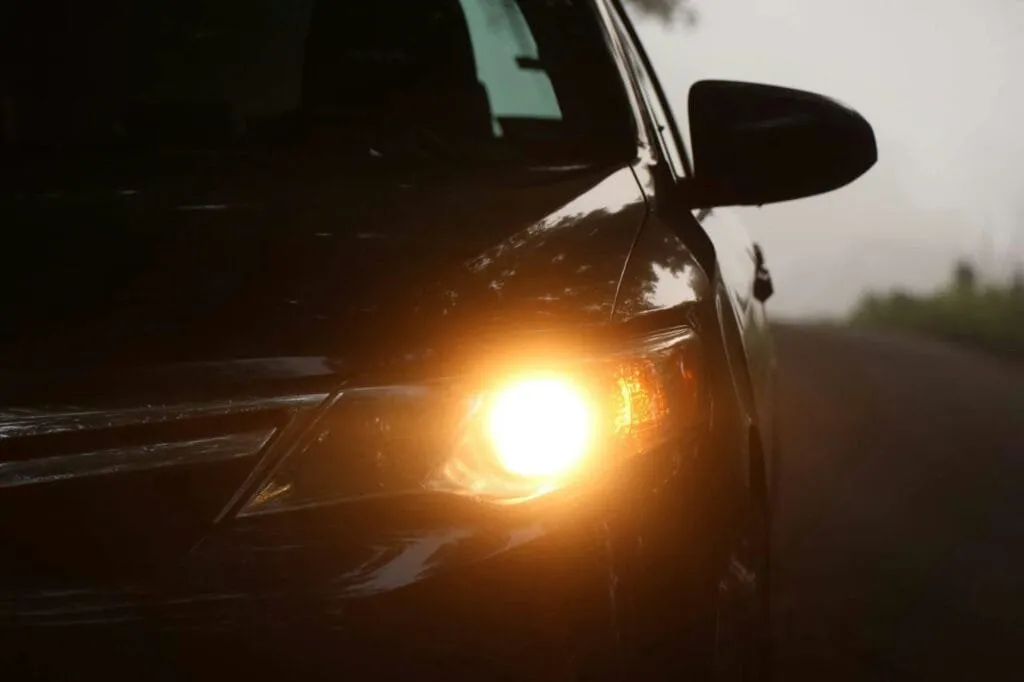
Modern headlight lenses are polycarbonate plastic, not glass, and that plastic is only protected by a thin UV coating. Once that coating breaks down, the lens itself starts to fog.
Why Headlights Fog Up
Constant UV exposure oxidizes the outer layer of the lens, turning it hazy and yellow over time. Moisture that works its way past worn seals adds internal fogging on top of that, and years of small impacts from road debris leave micro-scratches that scatter light instead of letting it pass through clean.
It's a Safety Issue, Not Just a Look
Oxidized lenses can cut usable light output significantly, which matters most exactly when you need it: driving at night or in fog. It's an easy thing to get used to gradually, which is part of why it goes unaddressed for so long.
What Restoration Actually Involves
A proper headlight restoration works through a series of wet-sanding stages to remove the oxidized layer, followed by machine polishing to bring back clarity, finished with a UV-protective sealant. That last step is the one that determines how long the results last.
Why DIY Kits Often Don't Last
Store-bought kits can genuinely improve clarity in the short term, but most skip a durable UV sealant, which means the haze creeps back within a few months. A professional restoration with a proper sealant typically holds up for a year or more.
If your headlights have gone cloudy, it's worth pairing restoration with your next detail rather than letting visibility keep slipping.