
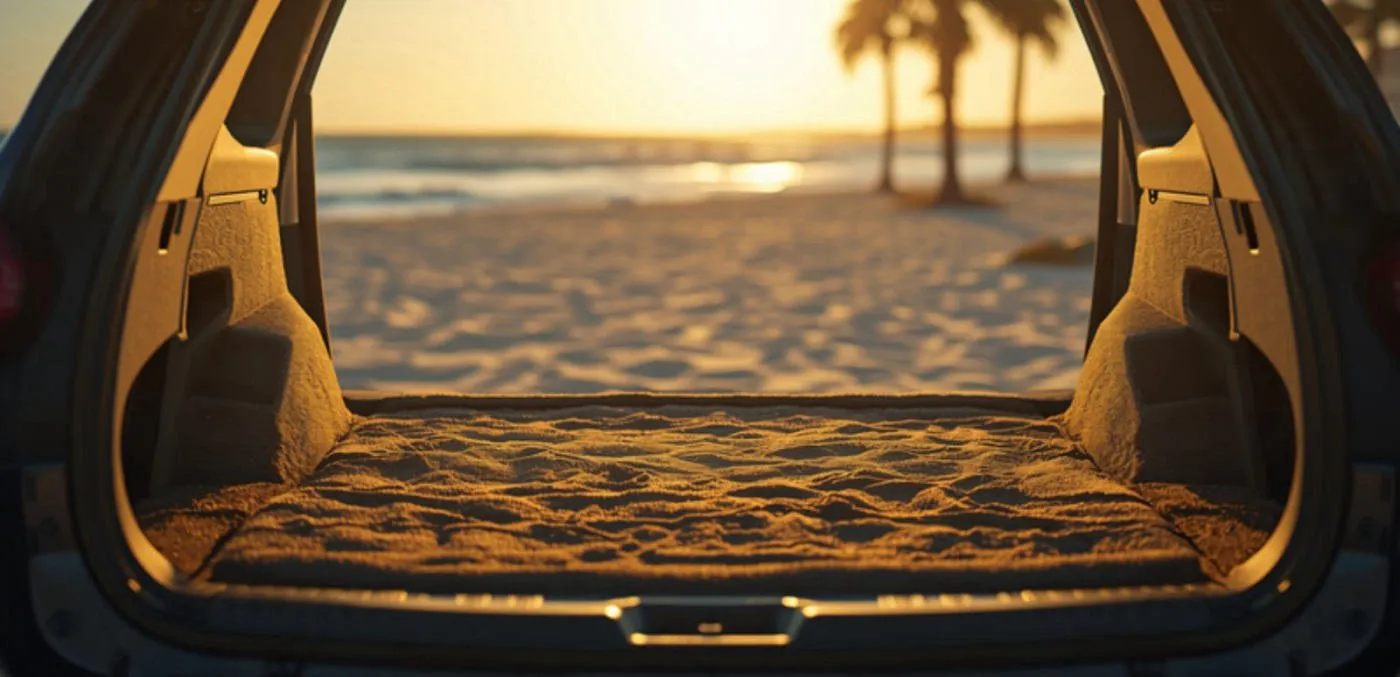
You spend an afternoon at the beach, load the towels and the cooler back in the car, and drive home with sand still stuck between your toes. It takes ninety seconds. You've done it a hundred times. The honest truth is, that ninety-second drive is doing more to your seats than a year of normal commuting.
Sand Isn't Dirt. It's Abrasive.
Regular dirt sits on top of a seat until you vacuum it off. Sand behaves differently. It's made of tiny, hard mineral fragments, and every time you sit down, shift your weight, or climb in and out, those fragments get pressed into the weave of cloth upholstery or dragged across vinyl and leather bolsters. It's the same abrasive action as sandpaper, just smaller grit and slower. A little sand tracked in once won't hurt anything. Sand that gets driven in after every beach day, week after week, works itself deeper into the seams and padding each time, and it doesn't come back out with a quick pass of a shop-vac.
This Isn't Just a Pacific Beach Problem
Anywhere people spend a beach day in San Diego, the same pattern shows up. Pacific Beach and Mission Beach see it constantly with daily beachgoers. La Jolla's coves, Ocean Beach and Sunset Cliffs near Point Loma, and the beaches around Coronado all put the same sand into the same seats, just with a different view out the window. If you're loading beach gear into your car on a regular basis, this is happening to your interior whether you notice it yet or not.
What Actually Helps Before You Even Get in the Car
Rinse off before you load up. Most beaches and beach parking lots have an outdoor shower or a hose for exactly this reason, and thirty seconds there keeps most of the loose sand off your skin before it ever touches a seat. Keep a towel or a dedicated seat cover in the car for anyone getting in straight from the sand. Shake out towels, mats, and beach bags outside the car instead of over the seats, and vacuum sooner rather than later, sand that sits for a week works its way in a lot deeper than sand that gets pulled out the same day.
What Actually Gets the Sand Out
Vacuuming does most of the work, but sand collects where a vacuum nozzle can't fully reach: seat tracks, vent slats, console seams, the gap between the seat and the center console. As part of a standard Interior or Complete Detail, we work an air compressor into those spots to blow sand out of places a hose attachment never touches. For sand that's already worked its way into the weave of carpet or upholstery, a drill brush agitates it loose first so the vacuum can actually pull it out instead of just pushing it around on the surface.
That standard process handles normal, everyday sand just fine. A car that's been collecting sand for months without a real cleanout, floor mats packed solid, sand worked deep into every seam, is a longer job than a typical detail accounts for, so we treat excessive sand buildup as its own add-on rather than trying to squeeze it into standard pricing. We'll take a look and let you know upfront if that's what your car needs.
None of this means you need to skip the beach or leave the cooler at home. It just means a car that regularly carries sand benefits from the compressor-and-brush treatment as part of a normal detail, rather than a quick vacuum alone, and catching it early keeps it from turning into that bigger cleanout later.