
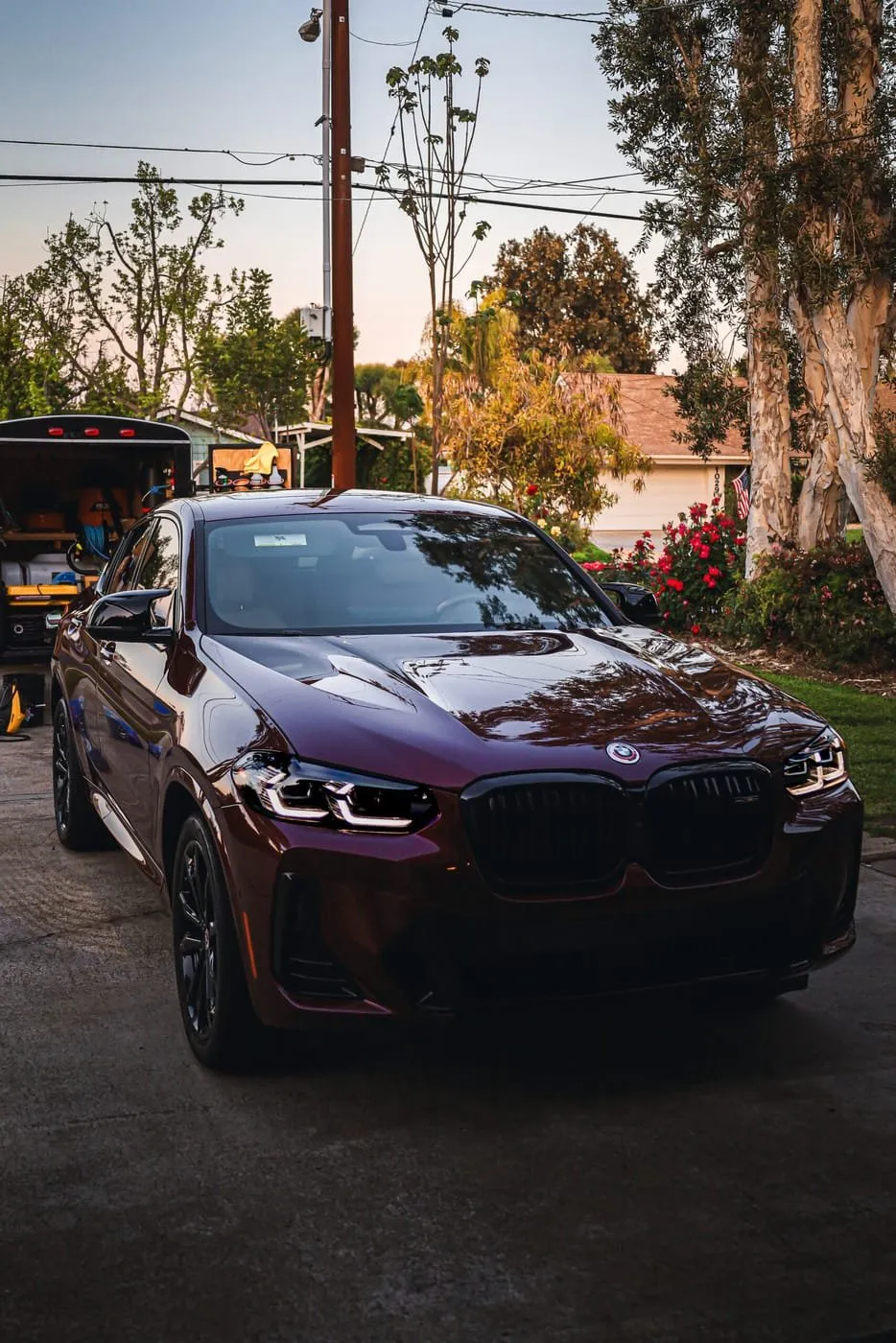
Not every dull or scratched-looking car needs paint correction. Sometimes a good wash and a coat of sealant is all it takes. But some paint problems are permanent until they're professionally corrected. Here's how to tell the difference.
1. Swirl Marks in Direct Sunlight
Stand your car in direct sun and look at a dark panel, like a hood or trunk, from an angle. If you see a spiderweb of fine circular scratches, that's swirl marks, usually caused by improper washing or automatic car washes. A wash won't remove these. Paint correction polishes them out.
2. The Fingernail Test
Run your fingernail lightly across a scratch. If you can feel a groove and your nail catches, the scratch has likely gone past the clear coat's surface. Shallow scratches that don't catch a fingernail can often be polished out with correction; deeper ones may need additional work beyond polishing.
3. Water Spots That Don't Wash Off
Light water spots wash away. Etched water spots, the kind left behind when hard water evaporates on hot paint, are actually a mineral deposit that has bonded to the clear coat. If a wash and clay bar don't remove them, they need to be polished out.
4. Dull, Hazy Paint That Won't Come Back with a Wash
If your paint looks flat or foggy even right after a wash, and even after applying a sealant, it's usually oxidation or accumulated micro-scratching across the clear coat, not dirt. A machine polish restores the clarity that a wash can't.
5. It's Been Years Since Any Correction Work
Even a well-maintained car accumulates fine scratches over years of washing, parking, and daily use. If your car is a few years old and has never had a correction service, there's a good chance a single-stage or two-stage correction would noticeably improve the gloss and depth of the paint.
What To Do Next
If any of these sound familiar, the fix is a single or two-stage paint correction, followed ideally by a ceramic coating to protect the freshly corrected surface. Correction without protection just means you're back to square one in a year or two.
Not sure which stage your car needs? Call or text us and we can take a look before recommending anything.