
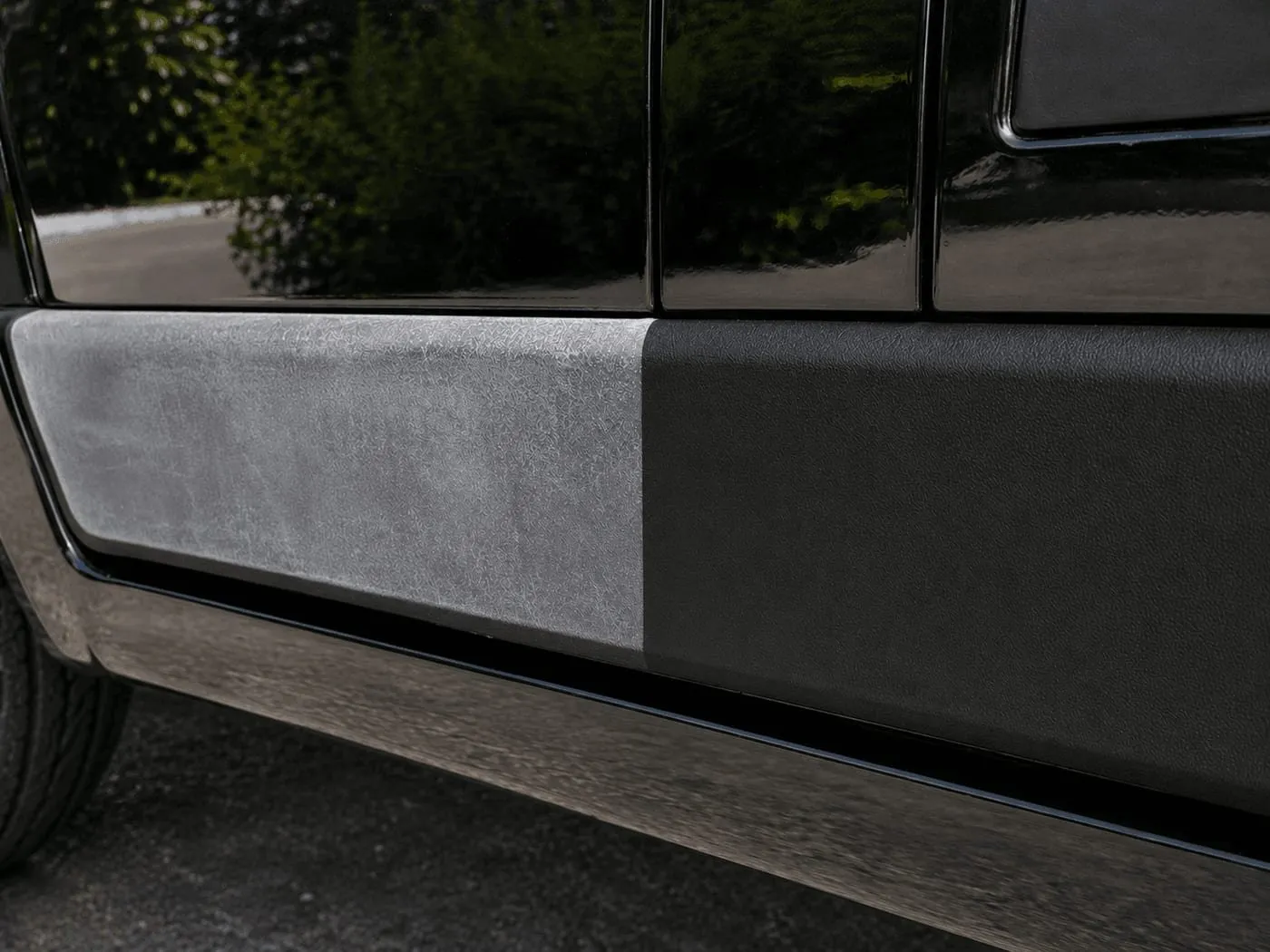
Black plastic trim (bumpers, mirror caps, door handles, side moldings) almost always starts out deep black. Given enough time in the sun, it turns a chalky gray. That's not dirt you can wipe off. It's UV damage happening at the surface level of the plastic itself.
What's Actually Happening
Unpainted plastic trim is held together by oils and plasticizers that keep the surface dense and dark. UV exposure slowly breaks those down, leaving a porous, rough surface that scatters light instead of absorbing it. That's the gray, faded look. It's the plastic equivalent of sun-bleached fabric.
Why Dressings and Sprays Don't Fix It
Trim dressings from the auto parts store restore some shine temporarily, but they sit on top of the damaged surface rather than repairing it. Most wash off or evaporate within a week or two, and some attract dust, making the trim look worse between applications.
What Actually Restores It
Real trim restoration uses a polymer-based treatment that penetrates the porous surface and re-seals it, bringing the color and depth back rather than masking it. Done correctly, it holds up for months at a time instead of days, and it's part of what we check for during a full detail.
When It's Too Far Gone
Trim that's deeply cracked or has been faded for years sometimes can't be fully restored to black. The plastic itself has degraded, not just the surface. In those cases, restoration still improves the look significantly, even if it doesn't turn back the clock completely.
If your trim has gone gray, it's worth addressing during your next detail rather than reaching for another bottle of spray-on dressing.