
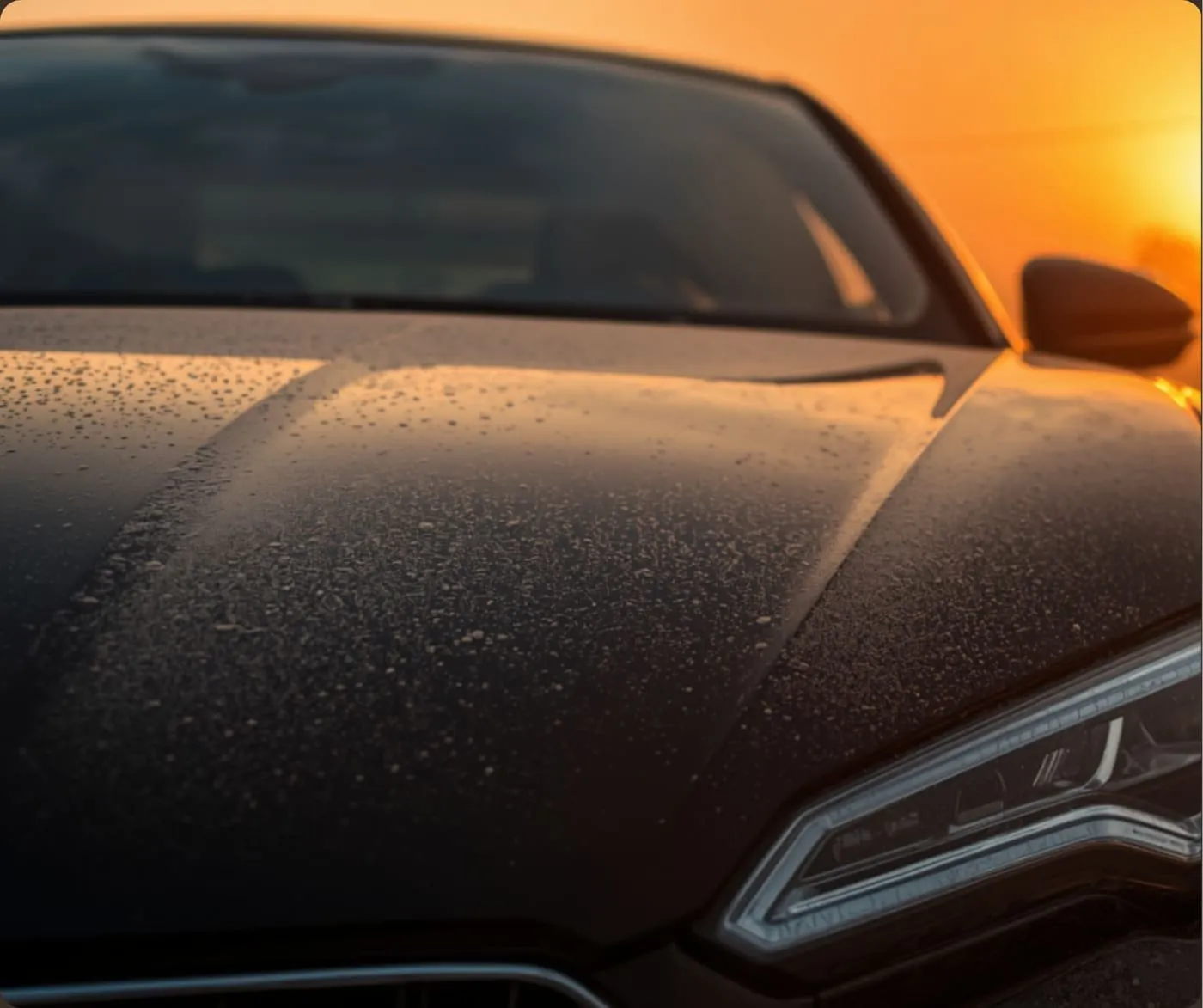
You come back out to your car after a windy night and it isn't exactly dirty. It's dusty, a thin gray-orange film sitting across the hood, the windshield, every flat surface facing the sky. It looks like a five-second job with a microfiber towel. The honest truth is, that quick wipe is usually the moment the real damage happens.
What's Actually Landing on Your Car
During a Santa Ana wind event, offshore gusts push dry desert air over San Diego's mountains and canyons toward the coast, carrying fine dust and dry chaparral debris with it. If a wildfire is burning anywhere upwind, actual ash gets mixed in too. None of that is soft. Under a microscope, it's small, hard, mineral particles, closer to fine sandpaper than to household dust.
Why Wiping It Off Makes Things Worse
Drag a dry towel, or even a barely damp one, across a dust-covered hood and you're grinding those hard particles across the clear coat. That's not a scare tactic, it's just friction: an abrasive trapped between cloth and paint scratches the surface, in fine circular lines you won't notice until direct sunlight hits the panel at the right angle. It's the same mechanism behind the swirl marks left by a dirty wash mitt or an automatic car wash's brushes, just delivered by wind instead of water.
San Diego's Santa Ana Season Is Ramping Up
San Diego County's Santa Ana season typically runs October through December, but local fire officials are already flagging this as a peak wildfire risk period heading into fall, with early wind events possible as soon as September. Dry brush, low humidity, and offshore wind together mean dust and ash settle on cars parked outside for days at a stretch, not just the ones close to an active fire.
The Right Way to Get It Off
Ash and dust removal follows the same rule as any other bonded-on contamination: get as much off as possible before a cloth ever touches the paint. Rinse first with a hose on a wide, low-pressure setting to float the loose particles away, then wash using the two-bucket method, one bucket of clean soapy water and one for rinsing the mitt, working section by section. Skip the drive-through tunnel wash during an active Santa Ana event, too. Those brushes are shared with every dust-covered car that went through before yours, which just automates the same scratching problem.
Protecting Your Paint Before the Next Event
A car that already has paint sealant or ceramic coating handles this kind of exposure differently. A sealed, hydrophobic surface lets loose dust rinse away in that first pass instead of gripping onto bare clear coat, which is the main reason coated cars come out of fire season with noticeably less fine scratching than uncoated ones. It's a different mechanism than the slow, corrosive damage coastal salt air causes, but the fix works the same way: don't let anything abrasive sit directly against unprotected paint.
If ash has already dried onto the paint, or you're not sure whether a panel picked up fine scratching from a wipe-down, a professional decontamination and inspection can tell you exactly what you're dealing with before it gets worse.