
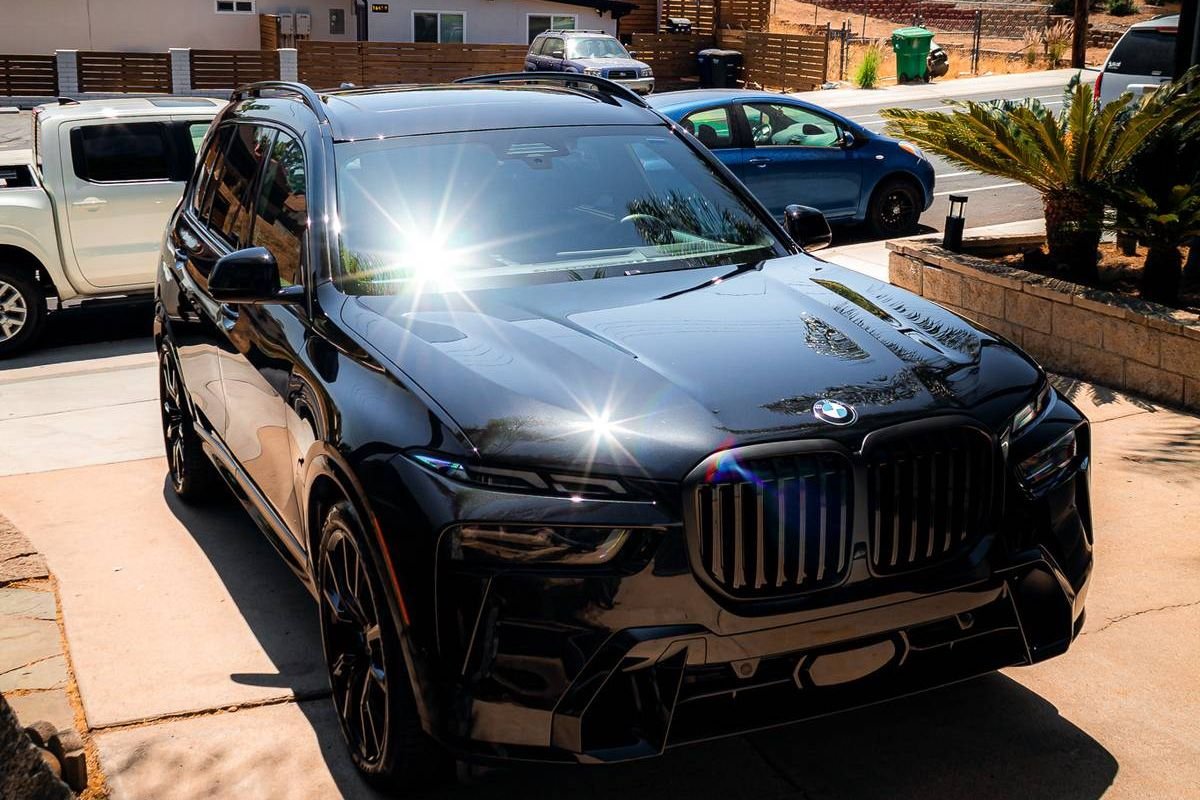
Someone quotes you for "paint correction" and the first question is fair: correct what? The paint isn't the wrong color. Nothing is broken. What they're talking about is the dull, cloudy look a car gets in direct sun, and the fine circles you see in the hood when you stand at an angle. Paint correction is the work that removes those.
What Does Paint Correction Mean?
Paint correction means machine polishing the clear coat to remove defects in it. The clear coat is the clear top layer over your car's color, and it's where swirl marks, haze, oxidation, and light etching live. A polisher with an abrasive polish levels that layer until the defects are gone, so light reflects off a flat surface again instead of scattering off thousands of tiny marks. That's what brings the gloss and depth back.
The word "correction" is the key part. The defects are taken out of the paint, not covered up. That's what separates it from most of what gets sold as shine.
What Paint Correction Removes
Swirl marks. Fine circular marks that show up in sunlight or under gas station lights. Most come from washing: brush car washes, dirty wash mitts, and wiping dust off with a dry towel. Our post on swirl marks covers where they come from.
Haze and dullness. Paint that looks flat even right after a wash.
Oxidation. Chalky, faded paint, common on cars that have sat in the sun for years. It's usually in the top of the finish, and polishing can bring the color and gloss back.
Light etching. Marks left when bird droppings, tree sap, or hard-water spots bake onto a hot panel. If the etch is shallow, polishing can level it out. We wrote more about bird droppings and hard water spots.
What It Doesn't Fix
Paint correction is not scratch removal. A scratch that catches your fingernail goes deeper than polishing can safely reach, and fixing it is a separate job done with touch-up paint or at a body shop. Rock chips are the same: the paint is missing, so there's nothing to level.
Clear coat that is peeling or flaking is also past what correction can do. That's clear coat failure, and it needs a repaint. We'll tell you which one you have before we start, and if the paint isn't a good candidate, we won't sell you a correction.
Paint Correction vs. Wax, Glaze, and "Buffing"
A wax or glaze sits on top of the paint. It can fill in fine swirls and make a car look better for a few weeks, then it washes away and the swirls are right where they were. Paint correction removes the swirls, so there is nothing to wash off.
A lot of people call any machine polishing "buffing." The name doesn't matter much. What matters is whether the job actually levels the clear coat or just puts a shiny product on it. If you're getting quotes, ask what percentage of swirls the job is meant to remove and what goes on the paint afterward.
How We Do a Paint Correction
Full wash and decontamination. A microfiber hand wash, bug and tar removal, then clay bar and iron decontamination. This happens before any polishing, because anything stuck to the paint would get dragged around by the pad.
Measure the paint. Factory clear coat is usually only 1.5 to 2 mils thick, about half the thickness of a sheet of paper, and every correction removes a little of it. Clear coat doesn't grow back, so we check what's there first.
Test spot. We polish one small section first to see how the paint responds and to make sure it's going to come out right.
Pick the pad and polish for your car. We use the least aggressive combination that gets the result, to keep as much clear coat as possible.
Polish panel by panel. One pass for a 1-step, two for a 2-step.
Alcohol wipe-down. This removes leftover polish oils so what you see is the real finish, not residue.
Protect it. Freshly polished paint is bare paint, so every correction ends with a 12-month ceramic coating.
Walk it with you. When we're done, we walk you around the car and go over the work.
1-Step vs. 2-Step Paint Correction
A 1-step correction (also called single-stage, or a paint enhancement) is one polishing pass. It targets about 60 to 70% of swirls and defects and suits paint that looks hazy or lightly swirled. Ours is $399 for a sedan or coupe, $499 for a small SUV or truck, and $599 for a large SUV or truck.
A 2-step correction (two-stage) adds a compounding pass before the finishing polish and targets about 85 to 90%. It's for neglected or heavily swirled paint. Ours is $599, $649, and $799 for the same sizes.
Both include the wash, clay bar and iron decontamination, wheels and rims deep cleaned, the alcohol wipe-down, and the 12-month ceramic coating. Not sure which your car needs? We look at the paint before we start and tell you. Full details are on our paint correction page.
Who Paint Correction Is For
It makes the most sense if your paint looks swirled or dull in the sun and a wash doesn't change it, if you're about to put a ceramic coating on the car (a coating locks in whatever the paint looks like underneath), or if you're getting a car ready to sell and want the paint to look its best.
If you want to check your own car first, our post on the signs your car needs paint correction walks through what to look for. If you want protection that lasts longer than a year, our 2-year ceramic coating starts at $695 and includes a one-step machine polish.
In short: paint correction means removing the defects in your clear coat instead of hiding them. It fixes swirls, haze, oxidation, and light etching. It doesn't fix scratches, chips, or failing clear coat. And it only makes sense when it's done carefully, because the clear coat it works on is thin.